
When it comes to Types of Commercial Flat Roofing in NJ, business owners face a critical decision that impacts both long-term value and building performance. New Jersey’s climate brings heavy snowfalls, hot summers, and powerful storms, making the choice of roofing material more than just a budget consideration. It becomes a matter of protecting your investment, employees, and day-to-day operations. Unlike residential properties, commercial roofs span larger areas, require advanced drainage solutions, and must withstand intense wear from HVAC systems and foot traffic.
At LGC Roofing’s commercial roofing services, the focus is on helping property managers and business owners find the most durable, energy-efficient, and cost-effective systems. Popular options in the Garden State include TPO roofing, EPDM rubber roofing, Built-Up Roofing (BUR), and Metal roofing. Each comes with its own strengths, costs, and lifespan expectations.
In this comprehensive guide, we’ll compare these four leading systems in detail. You’ll learn how they perform in terms of durability, installation, cost, energy efficiency, and maintenance. We’ll also link to valuable resources such as our Flat vs Low Slope Roofing blog and Roof Repair services for deeper insights into how to maximize your roof’s lifespan.
Understanding the Climate Challenges in NJ Roofing
Before diving into the specific Types of Commercial Flat Roofing in NJ, it’s crucial to understand the climate factors unique to the region. New Jersey lies in a zone where humid summers, icy winters, and hurricane-strength winds can all strike within the same year. A roof must be designed to adapt to these variations while keeping energy costs manageable.
Commercial properties often face heavy roof loads from snow and ice. Prolonged exposure to freezing temperatures can cause membrane shrinkage in some systems, while extreme summer heat can accelerate deterioration in others. A poorly chosen roof material may require frequent roof inspections or costly emergency repairs, making proactive selection critical.
The coastal areas of New Jersey are also prone to salt-laden air, which can corrode metal components if not properly coated. Meanwhile, urban commercial buildings may face increased stress from standing water caused by poor drainage. Each material—TPO, EPDM, BUR, and Metal—responds differently to these stresses. Some resist UV exposure better, while others excel in handling water infiltration.
Choosing the right system isn’t just about initial price; it’s about reducing lifetime maintenance costs and extending durability. The team at LGC Roofing emphasizes matching the right roofing type to the property’s location, structure, and use. With this context in mind, let’s explore each major roofing system.
TPO Roofing – The Rising Star of Flat Roofs
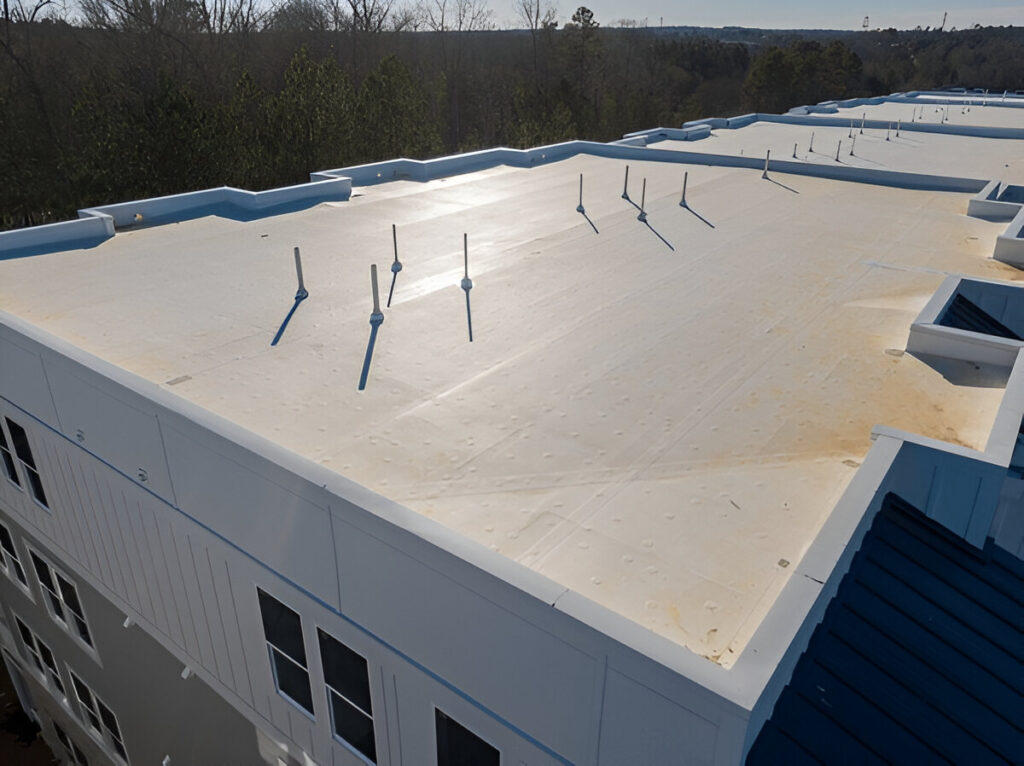
Thermoplastic Polyolefin, or TPO roofing, has become one of the fastest-growing Types of Commercial Flat Roofing in NJ. Its popularity stems from its balance of affordability, energy efficiency, and durability. Made from a blend of polypropylene and ethylene-propylene rubber, TPO membranes are typically white, which helps reflect sunlight and reduce cooling costs during New Jersey’s sweltering summers.
Businesses looking to cut utility expenses often turn to TPO because its reflective surface reduces the urban heat island effect. According to our Roof Coating services, this property can extend the lifespan of a building’s HVAC system by lowering demand.
TPO roofs are installed using heat-welded seams, which provide excellent resistance to leaks compared to adhesive seams. This makes them particularly effective in NJ’s wet climate. Another advantage is flexibility: TPO membranes resist tears and punctures, making them resilient against foot traffic during maintenance.
On the downside, TPO has a somewhat shorter track record compared to EPDM and BUR, leading to questions about long-term durability. However, when installed by professionals like LGC Roofing’s flat roof experts, TPO can last 20–30 years with minimal upkeep. For property owners who prioritize energy savings and modern performance, TPO often proves the best choice.
EPDM Roofing – Time-Tested and Reliable
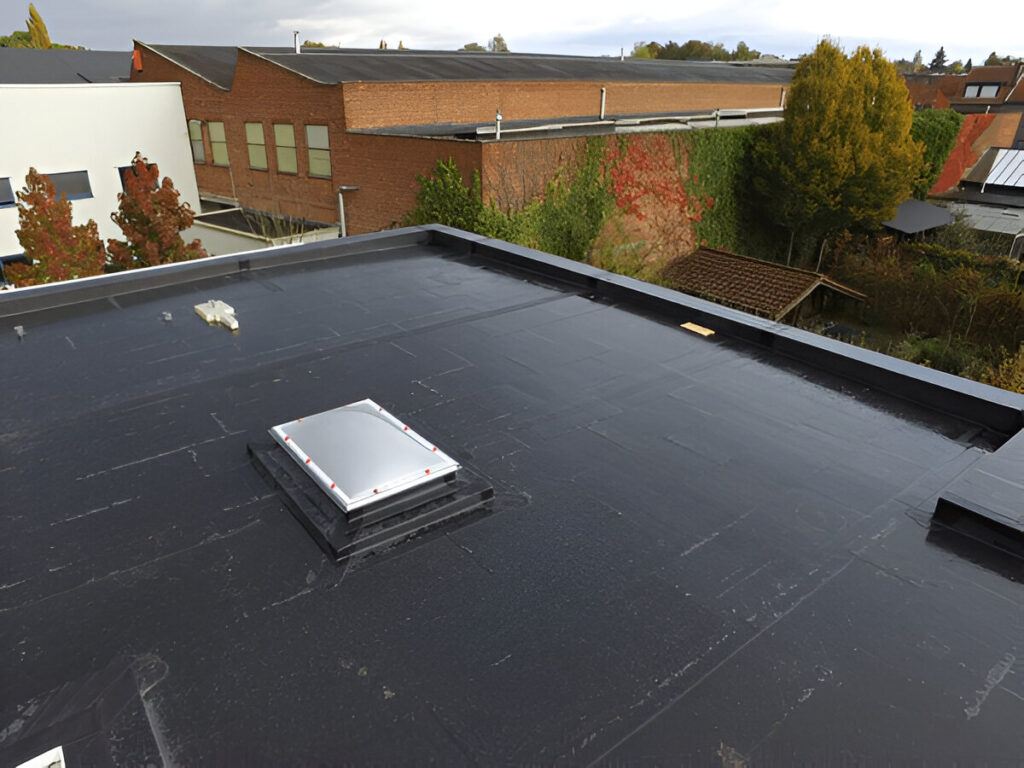
Ethylene Propylene Diene Monomer (EPDM roofing) is another widely used option across New Jersey. Known as “rubber roofing,” EPDM offers a proven record of durability, cost-effectiveness, and weather resistance. Its black membrane is ideal for withstanding extreme cold, making it a favorite in northern NJ counties like Bergen and Morris.
EPDM’s greatest advantage lies in its longevity. With proper maintenance and regular roof inspections, it can last up to 30 years or more. Its flexibility also allows it to expand and contract with temperature shifts, preventing cracks in freeze-thaw cycles. Unlike TPO, which reflects heat, EPDM absorbs it—an advantage in winter but less beneficial during hot summers.
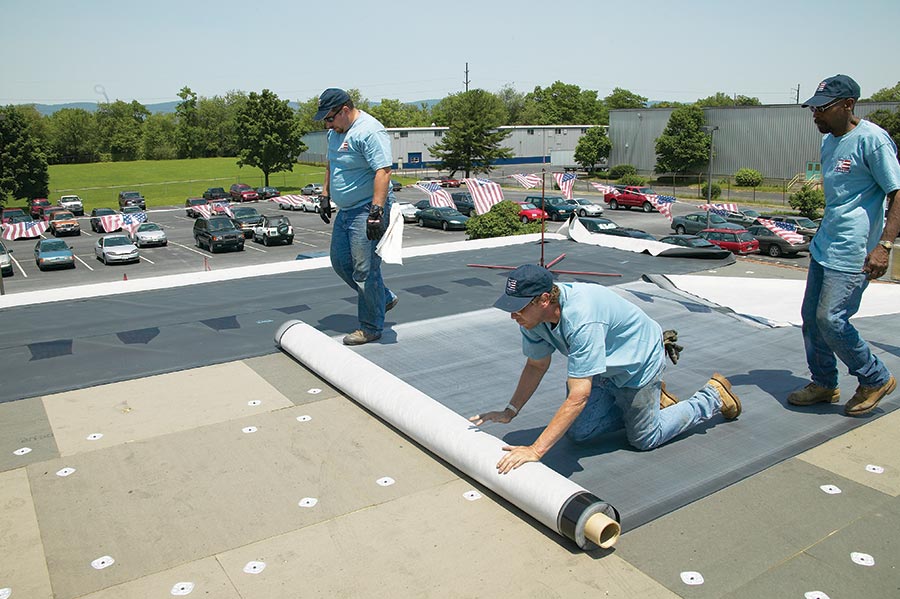
Installation is relatively straightforward, involving adhesive or ballasted systems, making it one of the most cost-effective flat roofing options. However, seams may require resealing over time, and its dark color may raise energy costs in cooling-dominant seasons.
Still, for businesses seeking low upfront costs and high durability, EPDM remains a trusted solution. Companies like LGC Roofing specialize in EPDM systems for offices, warehouses, and retail centers, delivering consistent performance across decades.
BUR (Built-Up Roofing) – The Traditional Powerhouse
Built-Up Roofing, or BUR roofing, is among the oldest Types of Commercial Flat Roofing in NJ, dating back more than a century. This system consists of alternating layers of bitumen (asphalt or coal tar) and reinforcing fabrics, topped with gravel or a reflective coating. Its multi-layer structure provides exceptional waterproofing and durability.
In regions like Essex County or Hudson County, where industrial facilities dominate, BUR has long been the go-to choice. Its heavy-duty construction resists punctures and distributes weight effectively, making it well-suited for roofs supporting heavy equipment. Businesses requiring reliable performance against ponding water and harsh conditions still prefer BUR.
BUR’s main drawback is weight. The layered system is significantly heavier than TPO or EPDM, meaning not all structures can support it. Installation is labor-intensive, often involving hot asphalt, which increases costs and disruption to business operations.
Despite these challenges, BUR remains valued for its proven resilience and longevity, often lasting 20–25 years or more. Property managers working with LGC Roofing’s commercial installation team often choose BUR for warehouses, factories, and institutional buildings that demand time-tested durability.
Metal Roofing – Modern Strength with Long Lifespan
Although often associated with sloped roofs, Metal roofing has become increasingly popular among NJ businesses seeking long-term performance. Metal panels, typically made from steel or aluminum, can be designed for low-slope applications and coated for enhanced weather protection.
The most striking advantage of metal is its lifespan. While TPO and EPDM last around 20–30 years, a well-installed metal roof can endure 40–50 years or longer. This makes it a sustainable option that reduces replacement frequency.
Metal roofs also offer superior fire resistance, a key consideration for industrial facilities. When combined with reflective coatings, they help reduce heat absorption, improving energy efficiency during summer months.
However, metal roofing does come with higher upfront costs. It can also be noisy during rainstorms and requires professional installation to ensure proper drainage on low-slope applications. But businesses that want to make a long-term investment in durability often find the higher initial price worthwhile.
At LGC Roofing, expert crews install and maintain metal systems tailored for New Jersey’s unique climate, ensuring decades of reliable protection for commercial buildings.
Cost Comparisons Across Roofing Types
When evaluating Types of Commercial Flat Roofing in NJ, cost plays a defining role. Prices vary significantly between TPO, EPDM, BUR, and Metal roofing, with differences in both installation and long-term expenses.
On average, TPO and EPDM systems cost between $4–$8 per square foot, making them affordable options for large facilities. BUR tends to run higher due to labor and material intensity, often reaching $7–$12 per square foot. Metal systems, while delivering the longest lifespan, command $10–$16 per square foot depending on material and coatings.
These upfront costs should be weighed against lifetime expenses. For example, TPO reduces energy bills through reflectivity, while EPDM provides excellent cold resistance with fewer repairs in winter climates. BUR requires more maintenance but delivers robust performance in demanding environments. Metal has the highest initial cost but pays off through decades of service.
LGC Roofing’s roof inspection services help business owners estimate not only installation costs but also expected maintenance over time. Factoring in repair, coating, and replacement cycles ensures a more accurate financial comparison.
Lifespan and Durability
The lifespan of a commercial roof depends not only on material but also on installation quality, maintenance practices, and environmental factors.
-
TPO roofing typically lasts 20–30 years when installed properly and maintained with annual inspections.
-
EPDM roofing is known for longevity, often exceeding 30 years in NJ’s cold-weather regions.
-
BUR systems last 20–25 years, though proper coatings can extend their life.
-
Metal roofs lead the pack, lasting 40–50 years or longer.
Durability also means resistance to punctures, UV rays, fire, and ponding water. TPO excels in seam strength, EPDM thrives in freeze-thaw conditions, BUR handles weight and traffic, and Metal offers unmatched fire resistance.
Regular maintenance and emergency repair services from LGC Roofing can significantly extend the life of all these systems. By addressing leaks, punctures, or coating degradation early, property owners maximize returns on their roofing investment.
Energy Efficiency and Environmental Impact
Energy efficiency is a growing priority for commercial property owners in New Jersey. Rising energy costs and sustainability goals drive the choice of roofing materials.
TPO roofing stands out for its reflective surface, which reduces heat absorption and lowers cooling costs. Metal roofing, when coated with reflective finishes, offers similar benefits, contributing to a cooler building envelope.
EPDM roofing, by contrast, absorbs heat due to its black membrane. While this is advantageous during winter, it raises cooling expenses in summer. However, reflective coatings can improve its performance. BUR systems vary, depending on the top layer; gravel or reflective coatings can enhance energy efficiency.
Environmentally, both TPO and EPDM are recyclable, while Metal is one of the most sustainable materials due to its long lifespan and recyclability. BUR, being asphalt-based, is less eco-friendly but remains a dependable option.
For businesses pursuing green certifications, consulting with LGC Roofing’s experts ensures the choice aligns with both performance needs and environmental goals.
Maintenance Requirements
Maintenance can significantly affect the lifetime cost of any roofing system. TPO membranes require periodic seam checks but generally need minimal upkeep. EPDM roofs may need occasional resealing at seams and edges, but repairs are relatively straightforward.
BUR systems often require more maintenance due to their layered construction. Cracks, blisters, and surface wear are common issues, but with proper roof repair services, these issues can be managed effectively. Metal roofing, though durable, requires inspections for corrosion, sealant failure, and fastener tightening.
LGC Roofing recommends at least one annual roof inspection and post-storm checks to catch issues early. Preventive maintenance programs ensure that minor repairs are handled before they escalate into costly emergencies.
Suitability by Building Type
Different Types of Commercial Flat Roofing in NJ are better suited for specific industries and building structures.
-
TPO roofing is excellent for office complexes and retail stores where energy savings are essential.
-
EPDM roofing thrives on warehouses, schools, and institutions that prioritize longevity and cost control.
-
BUR systems remain popular for factories and industrial properties requiring heavy-duty durability.
-
Metal roofing is ideal for high-value facilities, distribution centers, and businesses planning long-term occupancy.
Choosing the right system depends on balancing upfront cost, maintenance expectations, and energy performance. At LGC Roofing, professionals guide owners through this decision-making process, ensuring each property gets the most suitable solution.
Detailed Comparison Table
| Roofing Type | Average Cost (per sq ft) | Lifespan | Energy Efficiency | Maintenance Level | Best For |
|---|---|---|---|---|---|
| TPO | $4–$8 | 20–30 yrs | High (reflective) | Low | Offices, Retail, Healthcare |
| EPDM | $4–$8 | 25–30 yrs | Medium (absorbs heat) | Low-Medium | Warehouses, Schools, Institutions |
| BUR | $7–$12 | 20–25 yrs | Variable (depends on coating) | High | Factories, Industrial Buildings |
| Metal | $10–$16 | 40–50 yrs | High (reflective coatings) | Medium | Distribution Centers, High-Value Properties |
Conclusion: Making the Right Choice for Your Business
Selecting among the many Types of Commercial Flat Roofing in NJ comes down to your building’s structure, budget, and long-term goals. TPO provides energy savings, EPDM delivers reliability, BUR offers tradition and strength, and Metal ensures unmatched longevity.
No matter the choice, professional installation and ongoing care are essential. At LGC Roofing, our licensed experts provide everything from new roof installations to emergency repairs. For more insights, check out our blog on Commercial Roof Replacement in NJ and see how timely upgrades can protect your investment. You can also get a Free Quote.
By carefully weighing cost, durability, maintenance, and efficiency, you’ll ensure your roof withstands New Jersey’s toughest conditions while supporting your business for decades to come.
Contact Details
