
Your commercial roof is far more than just the surface above your head—it’s an investment in safety, efficiency, and property value. Choosing between flat roofing and low slope roofing is not a decision to take lightly, especially for New Jersey business owners who face unpredictable weather patterns throughout the year. This choice impacts maintenance requirements, energy efficiency, and even the functionality of your building. Whether you’re constructing a new property, planning a roof replacement, or weighing repair options, the right decision today can save you years of expense and frustration in the future.
At LGC Roofing NJ, we’ve helped thousands of clients navigate the flat vs low slope debate by looking at both immediate needs and long-term performance. Each roof type comes with its own advantages and challenges, and there’s no one-size-fits-all solution. The decision involves understanding your building structure, intended roof usage, climate conditions, and budget constraints.
This guide will walk you through the pros and cons of each option in detail, explain the materials best suited for both types, and cover cost comparisons, climate considerations, and best practices. We’ll also provide a clear comparison table and a persuasive call-to-action so you can confidently move forward with your project. Our aim is to give you the information you need to make a smart investment that will deliver lasting protection and value.
Understanding the Basics of Flat vs Low Slope Commercial Roofing
Before you compare the pros and cons, it’s important to understand what truly defines flat and low slope commercial roofing. Despite the term “flat,” most flat roofs have a slight pitch—usually less than 2 degrees—to allow water to drain. Low slope roofs, on the other hand, typically feature a pitch between 2:12 and 4:12. That small difference in slope changes how each system handles water, snow, and wind, as well as which materials work best for long-term performance.
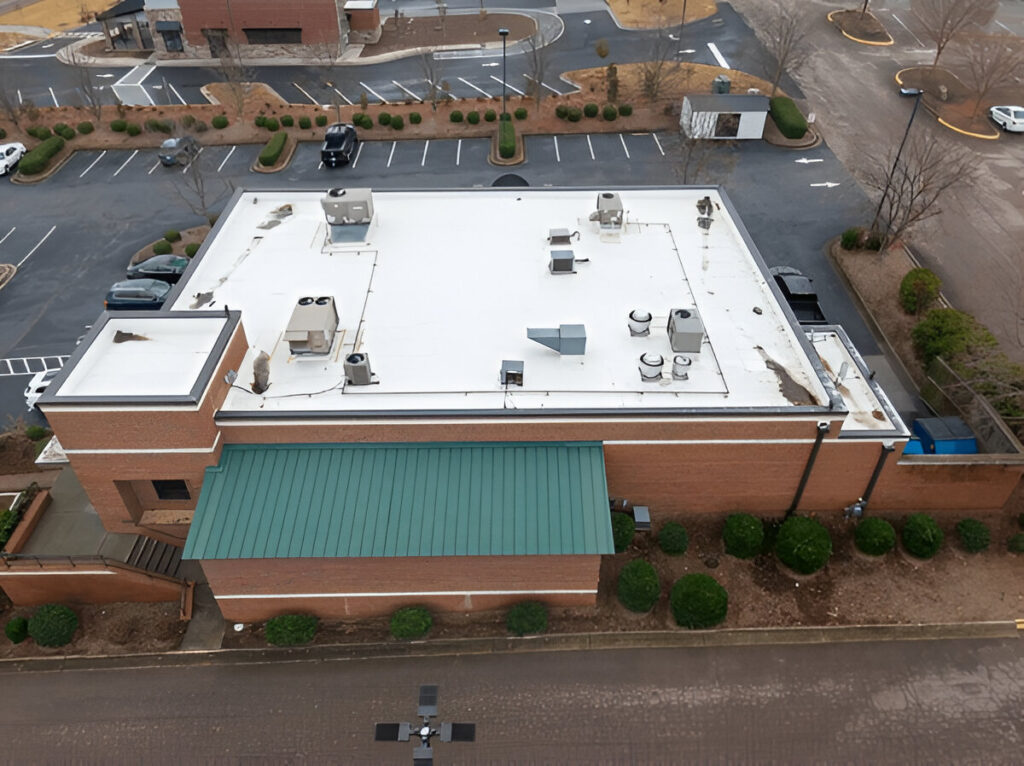
Flat roofs often suit buildings that need functional rooftop space, such as areas for HVAC units, solar panels, or rooftop gardens. Low slope roofs excel in climates with frequent rain or snow because the incline moves water and snow off the surface naturally, reducing the risk of pooling.
Both roof types can be built with high-quality materials like TPO, EPDM, PVC, or modified bitumen, each offering different advantages. Choosing the right type and material depends on your building’s structure, intended use, and maintenance capacity.
At LGC Roofing NJ, we specialize in both flat roof installations and low slope roof replacements. Our team evaluates your property’s needs, local climate, and budget to recommend the best solution. By understanding the fundamentals, you can approach your roofing decision with confidence and a clear plan for long-term protection.
Pros of Flat vs Low Slope Commercial Roofing
Pro 1: Usable Rooftop Space
Flat roofs offer unmatched rooftop usability, turning an otherwise empty area into a valuable extension of your property. Many commercial property owners in New Jersey utilize this space for HVAC systems, solar panel installations, satellite communications, or even green roof projects that improve insulation and sustainability. Because the surface is level, it’s easier and safer for contractors and maintenance teams to work on, reducing labor costs and risks. This space can also be leveraged for tenant amenities such as seating areas, which can increase property appeal and value. Low slope roofs, while less accommodating for recreational purposes, can still support equipment and smaller installations. The real advantage here is flexibility—flat roofs give you options that can directly benefit your business operations and energy management.
Pro 2: Lower Initial Costs for Flat Roofs
The affordability of flat roofs is one of their biggest selling points. Their design requires less complex structural framing, meaning less labor and fewer materials during installation. This can reduce upfront expenses by as much as 15–20% compared to low slope systems. This lower cost makes them particularly attractive for startups, small businesses, or property owners working within tight construction budgets. Additionally, because installation is quicker, labor costs are further reduced. Low slope roofs do require a higher initial investment due to additional materials and more complex installation requirements, but their long-term performance may justify the cost over decades of service.
Pro 3: Better Drainage for Low Slope Roofs
One of the strongest advantages of a low slope roof is its superior water runoff capability. The incline helps direct rainwater and melting snow toward drains and gutters naturally, reducing the need for intricate internal drainage systems. This minimizes the risk of pooling water, which can cause membrane degradation and lead to leaks. In areas like New Jersey, where weather can be harsh and unpredictable, this built-in drainage advantage significantly extends the roof’s lifespan and reduces maintenance calls. Flat roofs can still be designed for effective drainage, but it requires careful engineering and constant monitoring to ensure no blockages compromise the system.
Pro 4: Material Versatility
Both roof types can be constructed using high-performance materials like TPO, EPDM, PVC, and modified bitumen. This gives property owners the freedom to choose a system that aligns with their specific needs—whether that’s energy efficiency, UV resistance, flexibility in extreme temperatures, or resistance to chemical exposure. For example, TPO offers high reflectivity, making it a great option for flat roofs seeking to lower cooling costs. EPDM is valued for its flexibility and longevity, performing well on both flat and low slope applications. Material versatility ensures that no matter the roof type you choose, it can be optimized for maximum lifespan and cost-efficiency.
Pro 5: Easier Access and Maintenance
Flat roofs are much safer and more convenient for crews to walk on, which simplifies maintenance, inspections, and repairs. This ease of access means that potential issues can be identified and addressed quickly, often before they develop into major problems. Maintenance costs are generally lower for flat roofs simply because of the efficiency with which work can be carried out. Low slope roofs can still be serviced effectively, but require additional safety precautions, which can add to labor time and expense. The more accessible your roof, the easier it will be to maintain its integrity over time.
Cons of Flat vs Low Slope Commercial Roofing
Con 1: Drainage Challenges for Flat Roofs
Flat roofs depend heavily on engineered drainage systems such as scuppers, gutters, and interior drains. If debris blocks these components or if they’re improperly designed, water can pool on the surface. Over time, that standing water penetrates the membrane, causes leaks, and may even lead to structural damage. In colder months, ice can form in low spots, adding extra weight and creating slip hazards for maintenance crews. Property owners must commit to regular roof inspections and cleanings to keep water flowing. Partnering with a professional service like LGC Roofing NJ ensures your drainage stays clear and functional year-round.
Con 2: Slightly Higher Costs for Low Slope Roofs
Low slope roofs usually cost more to install than flat roofs. The higher price comes from extra framing work, increased material use, and greater installation precision. Crews often need to spend more time aligning roofing membranes and securing flashing to ensure water runs off correctly. While this higher upfront investment often pays off in longer lifespan and reduced repairs, it can be a hurdle for businesses with limited budgets. However, owners who choose low slope systems often recover that cost through fewer emergency repairs and less frequent replacements. Detailed cost planning with LGC Roofing NJ can help you see the long-term financial benefits.
Con 3: Limited Rooftop Usability for Low Slope
Although low slope roofs can still hold HVAC systems and smaller installations, the incline makes them less practical for large solar arrays, recreational areas, or rooftop gardens. Workers also face steeper surfaces, which require additional safety measures during maintenance, inspections, and equipment installation. This limitation can be significant if you want to maximize your building’s rooftop for multiple functions. Flat roofs remain the better option for versatility in design and usage. If you still prefer a low slope roof, careful planning can help you integrate essential equipment without compromising safety or performance.
Con 4: Maintenance Frequency for Flat Roofs
Flat roofs demand more frequent maintenance compared to low slope systems. Because water does not drain as naturally, you must check the roof after heavy rain or snow to ensure no pooling occurs. Regular inspections—at least twice a year—help spot early damage like membrane punctures, seam separation, or flashing wear. While these maintenance tasks are usually straightforward, they add to the building’s operating budget. Neglecting them can shorten the roof’s lifespan dramatically. Hiring a professional maintenance team such as LGC Roofing NJ ensures your flat roof stays in top condition and avoids expensive structural problems.
Con 5: Snow Load Considerations
In New Jersey winters, snow can accumulate quickly on flat roofs, adding thousands of pounds of weight in a single storm. Without timely removal, this weight can strain the structure, damage the membrane, and create dangerous ice dams. Low slope roofs naturally shed more snow, but they still require monitoring to prevent buildup in valleys or along edges. Commercial building owners should develop a snow management plan that includes professional removal services. Our emergency roofing services provide rapid snow and ice removal to keep your roof safe and functional, even during severe winter storms.
Comparison Table: Flat vs Low Slope Roofing
| Feature | Flat Roofing | Low Slope Roofing |
|---|---|---|
| Usable Space | Excellent | Moderate |
| Drainage | Requires engineered system | Natural runoff |
| Initial Cost | Lower | Slightly higher |
| Maintenance | More frequent | Less frequent |
| Lifespan | 20–25 years | 25–30 years |
| Best For | Rooftop equipment, budget projects | Long-term durability, heavy rain/snow areas |
Climate Considerations in New Jersey
New Jersey’s climate challenges flat and low slope commercial roofing systems year-round. Harsh winters bring heavy snow and ice, while summers bring heat and humidity. Flat roofs need carefully engineered drainage and regular snow removal to prevent structural strain from heavy loads. Low slope roofs naturally shed water and snow more efficiently, which reduces these risks. Both types must withstand strong winds and seasonal temperature swings. These shifts cause materials to expand and contract, which can lead to cracking and premature wear if you skip regular inspections.
Selecting the right material helps counter these conditions. EPDM works well because its flexibility handles temperature fluctuations, while TPO reflects sunlight and keeps interiors cooler during summer. Applying a roof coating can help both roof types resist UV damage and moisture infiltration. Routine roof inspections after major storms allow you to spot and fix problems before they spread.
Snow management also plays a key role. Flat roofs require proactive snow removal to maintain safety, while low slope roofs still need monitoring to prevent ice dams along the edges. Partnering with experienced contractors like LGC Roofing NJ ensures your roof is built and maintained to handle the state’s diverse weather. When you plan for these climate factors, your Flat vs Low Slope Commercial Roofing investment performs better, lasts longer, and costs less to maintain over time.
Cost Analysis and ROI
When you compare flat vs low slope commercial roofing, cost often becomes a deciding factor. Flat roofs usually cost less to install because crews need fewer materials and spend less time on complex framing. This initial savings can attract budget-conscious property owners. However, you might spend more on maintenance over the roof’s lifespan if you choose a flat system without proper drainage.
Low slope roofs require more materials and detailed installation, which raises the upfront price. Yet, these systems often deliver a better return on investment because they handle water and snow more effectively. As a result, they typically need fewer repairs and last longer. Both flat and low slope systems can improve ROI when you add energy-efficient upgrades. For example, installing reflective membranes can cut cooling costs, and placing solar panels on a flat roof installation can generate ongoing energy savings.
If you plan to maximize long-term value, you need accurate cost forecasting. Our team at LGC Roofing NJ evaluates your building’s structure, local weather, and material options to recommend the most cost-effective system. We consider installation cost, maintenance requirements, and projected lifespan. With the right planning, your Flat vs Low Slope Commercial Roofing choice can save you money every year while protecting your property for decades.
Material Selection and Longevity
Material choice directly affects how well your flat or low slope commercial roof performs over time. The right material can extend service life by decades, while the wrong one can lead to early repairs. Popular options include TPO, EPDM, PVC, and modified bitumen. Each offers unique strengths. TPO resists UV rays and reduces cooling costs. EPDM remains flexible in extreme temperatures. PVC delivers chemical resistance, and modified bitumen offers multi-layer durability.
Flat roofs often use single-ply membranes like TPO or EPDM because large sheets cover wide areas with fewer seams. Low slope roofs can use the same materials but often benefit from multi-ply systems that resist wind uplift and water intrusion. Proper installation by a qualified commercial roof installation team ensures these materials perform to their full potential.
Longevity depends on more than just the initial material choice. Consistent roof inspections and preventive maintenance, such as applying protective roof coatings, keep your system in peak condition. Addressing small repairs quickly prevents larger problems that shorten a roof’s life. When you select the right material and maintain it properly, your Flat vs Low Slope Commercial Roofing system can protect your property for 20–30 years or longer, providing maximum value for your investment.
About LGC Roofing NJ – Services & Customer Benefits
At LGC Roofing NJ, we are more than just a roofing contractor—we are your trusted partner in protecting and enhancing your commercial property. With over three decades of experience serving businesses across New Jersey, we deliver durable, cost-effective, and customized roofing solutions designed to withstand the state’s challenging weather conditions.
We offer a complete range of professional commercial roofing services, including:
-
Commercial Roof Installation – Expert installation of flat, low slope, and specialty roofing systems using premium materials.
-
Commercial Roof New/Replacement – Efficient removal and replacement for aging or damaged roofs to restore full protection.
-
Roof Repair – Fast and reliable solutions for leaks, punctures, and storm damage.
-
Roof Inspection – Comprehensive evaluations to detect issues early and extend roof life.
-
Flat Roof Installations – Specialized installation for energy-efficient, functional flat roofing systems.
-
Roof Coatings – Protective coatings to boost durability, improve energy efficiency, and extend roof lifespan.
-
EPDM Rubber Roofing – Flexible, weather-resistant rubber roofing ideal for NJ climate conditions.
-
Low Slope Roof Replacement – Long-lasting solutions designed to optimize water drainage and roof performance.
-
Emergency Roofing Services – 24/7 rapid response for urgent roofing issues.
Why customers choose LGC Roofing NJ:
-
Proven Expertise: Over 30 years of industry experience with thousands of successful projects.
-
Quality Materials: Only premium, manufacturer-approved products for maximum performance.
-
Custom Solutions: Roofing systems tailored to your property type, climate, and budget.
-
Long-Term Value: Focus on durability, energy efficiency, and reduced maintenance costs.
-
Trusted Service: Licensed, insured, and committed to customer satisfaction from start to finish.
Whether you need installation, repair, replacement, or preventive maintenance, our team ensures your roof delivers decades of reliable protection.
Contact Us Today
Choosing between flat and low slope commercial roofing affects your building’s durability, maintenance schedule, and long-term costs. This guide shows how flat roofs deliver affordable installation and versatile rooftop space, while low slope roofs provide superior drainage and a longer lifespan. Your property’s design, operational needs, and budget guide the choice—but one fact remains: you need to install and maintain your roof correctly if you want it to last for decades.
At LGC Roofing NJ, our roofing experts give you clear guidance, install top-grade materials, and complete every project with precise craftsmanship. We work on both flat roof systems and low slope roofing. Our team performs commercial roof installations, handles roof replacements, delivers fast emergency roof repairs, and conducts thorough roof inspections to keep New Jersey properties secure year-round.
Address small issues now before they grow into expensive problems. Call us today for a free estimate, and let our skilled team design a roofing system that matches your needs and budget.
LGC Roofing NJ
Adress: 1102 Indian Hill Rd, Toms River, NJ 08753
NJ License: 13VH12032400
Phone: (609) 712-8157
Email: lgcroofing@yahoo.com
Website: www.commercialroofingnj.com
