
When it comes to commercial real estate in New Jersey, many property owners focus on location, square footage, and interior upgrades. However, one of the most influential—and often overlooked—factors in determining property value is the condition and quality of the roof. A well-maintained commercial roofing system doesn’t just protect a building; it directly contributes to its financial performance, tenant appeal, and long-term investment value.
For property owners working with experienced professionals like LGC Roofing, understanding this connection can help guide smarter decisions that maximize return on investment.
How Commercial Roofing Impacts Property Value in New Jersey
First Impressions and Curb Appeal
In a competitive New Jersey commercial real estate market, first impressions matter. The roof plays a significant role in how a building is perceived from the outside. A clean, modern, and well-maintained roof signals that the property has been properly cared for, which can attract higher-quality tenants and buyers.
On the other hand, a visibly aging or damaged roof can raise red flags. Prospective tenants or investors may assume there are underlying maintenance issues, which can reduce interest and ultimately lower the property’s market value. According to industry insights, a high-quality roof enhances aesthetics and helps a building stand out in crowded markets.
Increased Property Appraisal Value
The condition of a commercial roof is a key factor during property appraisals. Appraisers consider the roof’s age, materials, and overall condition when determining a building’s worth. A newer or recently restored roof can increase appraisal value because it reduces the likelihood of immediate repair costs.
Additionally, buyers are often willing to pay more for properties that require fewer upfront investments. A new or well-maintained roof provides peace of mind, making the property more attractive and justifying a higher asking price.
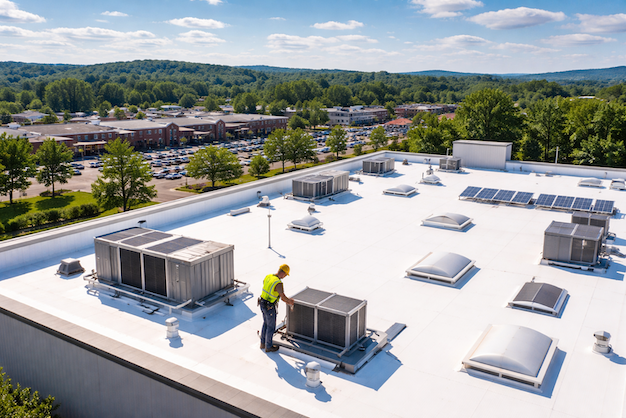 Energy Efficiency and Operating Costs
Energy efficiency is a major consideration for commercial properties in New Jersey, where seasonal temperature swings can be significant. Modern roofing systems often include reflective materials, improved insulation, and energy-efficient coatings that help regulate indoor temperatures.
These upgrades reduce heating and cooling costs, which directly impacts a building’s net operating income (NOI). Lower operating expenses make the property more profitable, which in turn increases its overall value. In fact, improvements that boost energy efficiency can play a direct role in increasing valuation by improving financial performance.
Tenant Retention and Satisfaction
A high-quality roof contributes to a more comfortable indoor environment by preventing leaks, maintaining insulation, and reducing outside noise. These factors are especially important for office buildings, retail centers, and industrial spaces throughout NJ.
Satisfied tenants are more likely to renew leases, reducing vacancy rates and ensuring consistent rental income. Since commercial property value is closely tied to income stability, tenant retention plays a critical role in maintaining and increasing value.
Protection Against New Jersey Weather
New Jersey experiences a wide range of weather conditions, including heavy rain, snow, ice, and strong winds. A durable commercial roofing system acts as the first line of defense against these elements, protecting the building’s structure and interior assets.
A compromised roof can lead to water damage, mold growth, and structural issues—all of which can significantly decrease property value. Preventative maintenance and timely repairs help avoid these costly problems and preserve the building’s integrity over time.
Lower Maintenance and Long-Term Savings
Investing in high-quality commercial roofing may involve a higher upfront cost, but it often leads to substantial long-term savings. Durable materials and professional installation reduce the frequency of repairs and extend the roof’s lifespan.
Regular maintenance also plays a key role. Proactive inspections and minor repairs can prevent major issues, helping property owners avoid expensive emergency fixes and premature replacements. Over time, these savings contribute to a stronger overall return on investment.
Insurance and Compliance Benefits
Another often-overlooked factor is how roofing impacts insurance and compliance. Buildings with newer, code-compliant roofing systems may qualify for lower insurance premiums due to reduced risk of damage. Additionally, meeting current building codes is essential when selling or refinancing a property.
Failing to address roofing issues can delay transactions or lead to costly compliance upgrades, both of which can negatively affect property value.
A Smart Investment for NJ Property Owners
Ultimately, commercial roofing is not just a maintenance item—it’s a strategic investment. Whether through repairs, restoration, or full replacement, improving your roof can enhance curb appeal, reduce operating costs, and increase tenant satisfaction.
For New Jersey property owners, working with a trusted contractor like LGC Roofing ensures that your roofing system is built to handle local weather conditions while maximizing long-term value.
Final Thoughts
Your commercial roof plays a critical role in the overall value of your property. From boosting energy efficiency and tenant retention to improving appraisal value and protecting against the elements, the impact is significant. If you’re looking to increase the value of your commercial building in NJ, investing in professional roofing services is one of the most effective steps you can take. contact LGC Roofing today!
