
Your commercial roof plays a critical role in protecting your building, employees, equipment, inventory, and daily operations. Unfortunately, many business owners and property managers don’t realize there’s a roofing problem until significant damage has already occurred. Recognizing the warning signs early can help you avoid costly repairs, operational disruptions, and premature roof replacement.
At LGC Roofing, we have been helping New Jersey businesses protect their properties with professional commercial roofing services for decades. Understanding when your roof requires immediate attention can save you time, money, and stress.
Water Leaks Inside the Building
One of the most obvious signs of a roofing problem is water infiltration. If you notice water stains on ceilings, wet insulation, puddles on the floor, or dripping water during rainstorms, your commercial roof likely has a leak that needs prompt repair.
Even a small leak can quickly lead to larger issues, including:
- Mold and mildew growth
- Damaged insulation
- Structural deterioration
- Ruined inventory and equipment
- Higher energy costs
Commercial roof leaks rarely resolve themselves. The longer they are ignored, the more expensive the repairs typically become.
Ponding Water on Flat Roofs
Many commercial buildings utilize flat or low-slope roofing systems. While these roofs are designed to handle rainwater, standing water that remains for more than 48 hours after a storm is a serious concern.
Ponding water can indicate:
- Poor drainage
- Clogged drains or scuppers
- Structural sagging
- Membrane deterioration
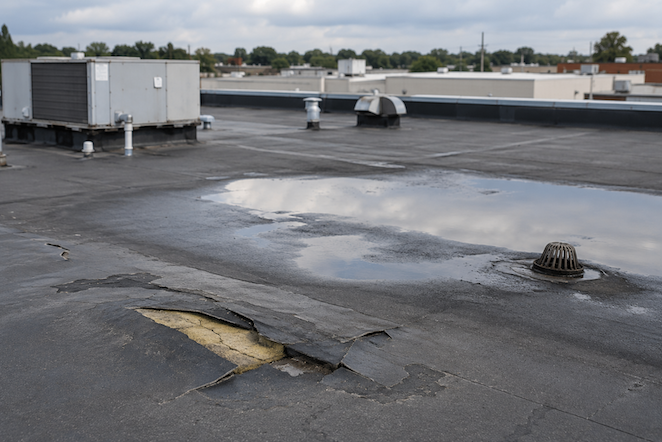 Standing water places additional weight on the roof and accelerates material breakdown. Immediate inspection is recommended whenever ponding water becomes a recurring issue.
Visible Roof Membrane Damage
Commercial roofing systems often rely on membranes such as TPO, EPDM, PVC, or modified bitumen. Over time, these materials can become damaged due to weather exposure, foot traffic, debris, and aging.
Warning signs include:
- Tears or punctures
- Cracks
- Blisters or bubbles
- Open seams
- Loose flashing
Even minor membrane damage can allow water to penetrate beneath the roofing system and create hidden moisture problems. Professional repairs can often prevent the need for a full roof replacement if caught early. Commercial roofing systems are especially vulnerable around penetrations, HVAC units, and flashing details.
Rising Energy Bills
An unexplained increase in heating or cooling costs may be linked to roofing issues. Damaged insulation, moisture infiltration, and deteriorating roofing materials can reduce your building’s energy efficiency.
When your roof no longer provides proper thermal protection, your HVAC system must work harder to maintain indoor temperatures. This increased workload often results in higher utility expenses.
If your energy bills have steadily increased without another obvious cause, a commercial roof inspection may reveal underlying problems.
Sagging or Uneven Roof Areas
A sagging commercial roof should never be ignored. Visible dips, depressions, or uneven sections may indicate:
- Water damage
- Structural weakening
- Saturated insulation
- Deck deterioration
These conditions can compromise the structural integrity of your building and may eventually lead to roof collapse if left unaddressed.
Any noticeable sagging should be evaluated immediately by an experienced commercial roofing contractor.
Mold, Mildew, or Musty Odors
Moisture trapped inside a roofing system often creates the perfect environment for mold and mildew growth. If building occupants notice persistent musty odors or visible mold around ceilings and walls, the roof could be the source of the problem.
Beyond property damage, mold can negatively impact indoor air quality and potentially create health concerns for employees and visitors.
Addressing moisture intrusion early helps protect both your building and its occupants.
Storm Damage
New Jersey experiences severe weather throughout the year, including heavy rain, snow, high winds, and coastal storms. After any major weather event, it’s important to inspect your commercial roof for signs of damage.
Common storm-related roofing issues include:
- Lifted roofing materials
- Damaged flashing
- Punctures from debris
- Membrane separation
- Water intrusion
Even if damage isn’t immediately visible from the ground, a professional inspection can identify hidden issues before they worsen. Commercial roofs face significant exposure to wind, moisture, temperature fluctuations, and rooftop equipment, making regular inspections essential after severe weather events.
Aging Roofing Systems
Every commercial roof has a limited lifespan. As roofing materials age, they become more susceptible to leaks, cracking, and weather-related deterioration.
If your roof is approaching the end of its expected service life, recurring repairs may indicate that larger problems are developing beneath the surface. Scheduling a professional assessment can help determine whether repairs or replacement will provide the best long-term value.
Trust LGC Roofing for Expert Commercial Roof Inspections
When it comes to commercial roofing, early intervention is the key to avoiding costly damage and business interruptions. At LGC Roofing, we specialize in commercial roof inspections, repairs, maintenance, restoration, and replacement throughout New Jersey. With decades of experience working on flat roofs, metal roofing systems, rubber roofing, and more, our team provides reliable solutions designed to protect your investment. LGC Roofing has extensive experience servicing commercial properties throughout New Jersey and offers a variety of commercial roofing systems and repair solutions.
If you’ve noticed any of these warning signs, don’t wait for the problem to worsen. Contact LGC Roofing today to schedule a professional commercial roof inspection and keep your building protected year-round.
